Process Framework
- Process Framework
- a framework
that is used to construct endeavor-specific
methods and associated
processes
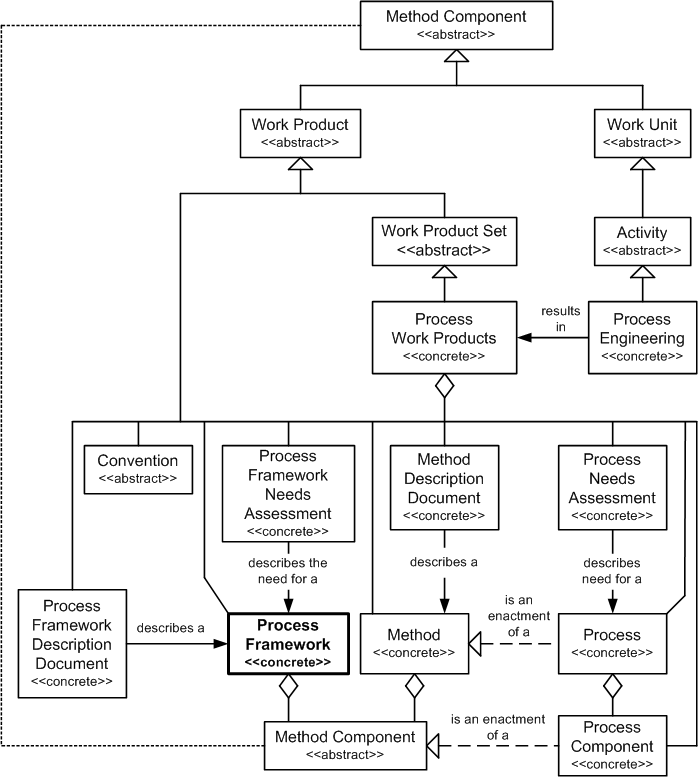
As illustrated in the preceding figure, process frameworks are part of the following inheritance hierarchy:
- Type: Concrete
- Superclass: Framework
- Subclasses: None
- Instances:
The typical responsibilities of a Process Framework are to:
- Improve the quality of endeavor-specific processes.
- Increase the productivity of the
process engineering activity.
A Process Framework typically has the following contents:
- Process Metamodel,
a model of process models describing their common classes of process components,
the relationships between them, and any constraints (i.e., well-formedness rules)
that constrain the classes and their relationships
- Process Repository,
a repository of reusable process component classes from the process metamodel
- Process Framework Usage Guidelines,
guidelines for constructing process framework compatible process models (a.k.a., methods)
consisting of process component classes and for helping to maintain the process repository
The typical stakeholders of a Process Framework are:
- Producer:
- Evaluators:
- Approvers:
- Maintainers:
- Users:
A Process Framework is typically produced during the following phases:
A Process Framework typically can be started if the following preconditions hold:
The typical inputs to a Process Framework include:
- Work Products:
- Stakeholders:
- Where practical, use an industry standard process framework such as the OPEN Process Framework.
A Process Framework is typically constrained by the following conventions: