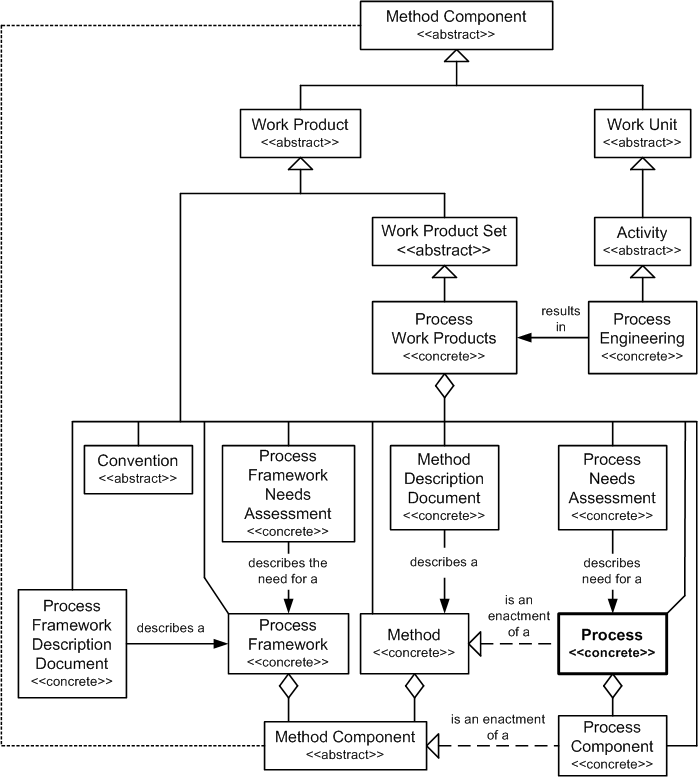
Process
- Process
- a
work product modeling the enactment (i.e., instantiation) of a
method consisting of a cohesive collection of instances of
method components (i.e., process components)
modeling the actual way work products are produced and services are provided
As illustrated in the preceding figure, Process is part of the following inheritance hierarchy:
The typical responsibilities of a Process are to:
- Document the work products actually produced and modified.
- Document the languages that the work products are constructed with.
- Document the work units actually performed to produce the work products.
- Document the producers who actually performed the work units.
- Document the stages during which the producers perform these work units to produce these work products and provide these services.
A Process typically has as contents instances of the following method components:
The typical stakeholders of a Process are:
- Producer:
- Evaluator:
- Approvers:
- Maintainers:
- Users:
The Process is typically used by practically every endeavor producer except tools including:
A Process is typically produced (i.e., enacted) during the following phases:
A Process typically can be started if the following preconditions hold:
- The endeavor has started.
- The corresponding method exists.
- Some of the stakeholders have been staffed and trained in the use of the method.
The typical inputs to a Process include:
- The scope of the process is the scope of the corresponding method, which includes the phases
during which the method is enacted.
- Processes incrementally come into existance as the methods are enacted.
- Processes do not exactly correspond to their corresponding methods because people never exactly
follow methods on real endeavors.
- It is possible to have a process without a corresponding method if the people on an endeavor
follow no method (i.e., process hacking).
A Process is typically constrained by the following conventions: